
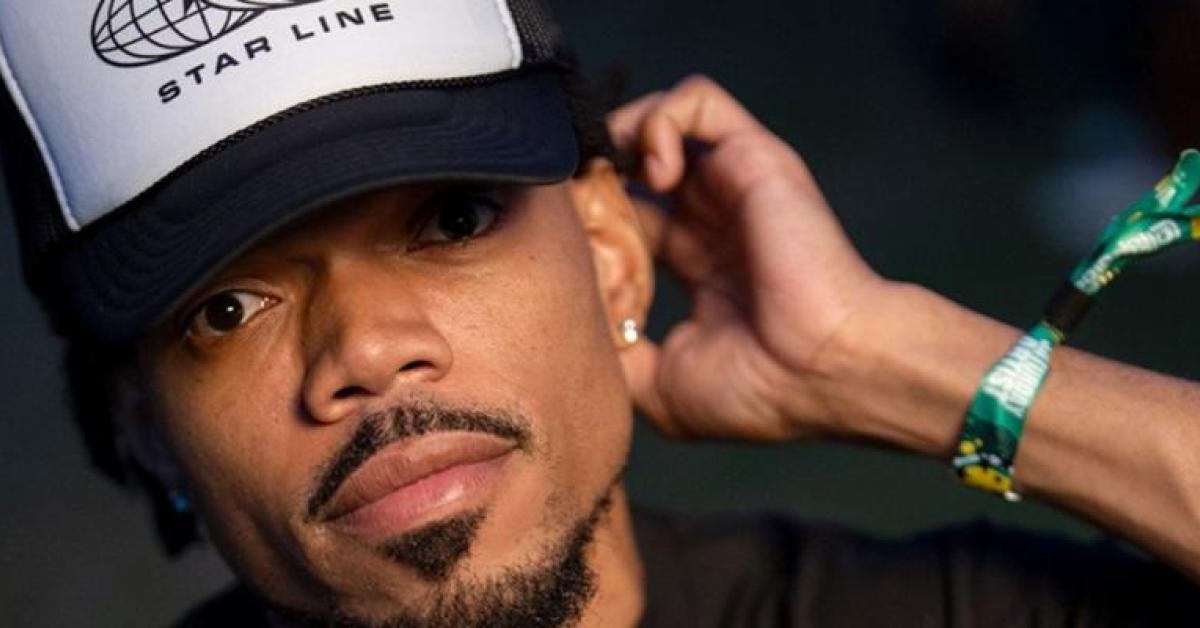
Chance the Rapper Is a Hall of Famer — But Does He Deserve It?

Chance the Rapper is officially a Hall of Famer.
SoundExchange announced Wednesday that the Chicago rapper has received its Hall of Fame Award, recognizing him as one of the most-streamed artists in the organization's more than 20-year history of administering digital performance royalties.
At first glance, that might raise a question:
Chance the Rapper? Already?
Not because Chance hasn't had an important career.
But consider the company.
The SoundExchange Hall of Fame includes names like Mariah Carey, Billy Joel, Earth, Wind & Fire, Linkin Park, Kirk Franklin, Janelle Monáe, Carrie Underwood and Celia Cruz.
Artists with enormous catalogs. Decades of hits. Generations of listeners.
Chance's career looks very different.
So what exactly did he do to earn a place among them?
Chance Doesn't Have a Huge Discography
Chance's rise was unconventional from the beginning.
He broke through with 10 Day in 2012 before Acid Rap turned him into one of hip-hop's most talked-about independent artists in 2013.
Then came Coloring Book in 2016.
The project made history as the first streaming-only album to win a GRAMMY, with Chance taking home Best Rap Album as well as Best New Artist and Best Rap Performance in 2017.
But here's where his résumé gets interesting.
Chance didn't release his first official studio album, The Big Day, until 2019.
And the response wasn't what many expected.
After years of building one of independent music's biggest success stories, The Big Day received a mixed reception and marked the beginning of a much quieter period in Chance's recording career.
Then Chance Seemed to Disappear
In 2020, Chance split from longtime manager Pat Corcoran, who had helped guide his career since 2012.
The relationship deteriorated into a lengthy legal battle over money, management decisions and the circumstances surrounding their split.
At the same time, Chance went years without releasing another full-length album.
For an artist who had once seemed positioned to redefine the independent music business, his momentum appeared to slow dramatically.
He continued releasing music, performing and pursuing other ventures, but the explosive run from Acid Rap through Coloring Book was difficult to recreate.
Chance finally returned with his second studio album, Star Line, in 2025.
The project debuted at No. 22 on the Billboard 200.
Which brings us back to the question:
How does an artist with a relatively small catalog and a years-long gap between albums become one of SoundExchange's most-streamed artists ever?
This Isn't the Hall of Fame You Think It Is
The answer starts with understanding what the SoundExchange Hall of Fame actually recognizes.
This isn't the Rock & Roll Hall of Fame.
There isn't an annual class selected by a committee of voters debating cultural importance or career accomplishments.
SoundExchange created its Hall of Fame Award in 2023 to recognize artists and recordings that rank among the most streamed in the organization's history.
And SoundExchange deals specifically with certain digital performances of sound recordings.
That means Chance isn't being placed next to Billy Joel or Mariah Carey because someone decided their careers are equivalent.
The data put him there.
Maybe Chance's Smaller Catalog Makes This MORE Impressive
That's where the conversation changes.
Chance built much of his career around a model that initially confused the traditional music industry.
He gave music away.
He leaned heavily into streaming.
He remained independent while Coloring Book became the first streaming-only project to win a GRAMMY.
And now, nearly a decade after that historic moment, the organization responsible for administering billions of dollars in digital performance royalties says Chance ranks among the most-streamed artists in its history.
Maybe the interesting question isn't whether Chance has released enough albums to deserve the recognition.
Maybe it's how much impact he managed to generate with so few of them.
Look at Who Else Is in the Hall
The SoundExchange Hall of Fame isn't limited to one genre or generation.
Previous recipients include Mariah Carey, Billy Joel, The Killers, Carrie Underwood, Janelle Monáe, Linkin Park, Kirk Franklin, Earth, Wind & Fire, Celia Cruz, Jonas Brothers and others.
Some honors recognize an artist's overall streaming performance.
Others have recognized individual recordings that rank among SoundExchange's most-streamed tracks.
What connects them isn't necessarily album sales, GRAMMYs or cultural influence.
It's digital performance.
And according to SoundExchange's data, Chance belongs in that conversation.
There's Still a Lesson for Independent Artists
Chance's Hall of Fame recognition also points toward something independent artists should understand about their own careers.
SoundExchange collects and distributes certain digital performance royalties for sound recordings from services including digital radio and other eligible non-interactive platforms.
It isn't the same as ASCAP, BMI or SESAC.
And it isn't the same money your distributor collects from on-demand streams on platforms like Spotify or Apple Music.
SoundExchange says it has distributed more than $13 billion to recording artists and rights owners since its inception.
Registration is free.
So while Chance's award gives hip-hop something to debate, there's a practical question independent artists should ask themselves too:
If SoundExchange is measuring all these digital performances, are you properly registered to collect yours?
So, Does Chance Deserve It?
If we're judging purely by the size of his discography, someone could certainly look at Chance's career and question how quickly the words “Hall of Fame” arrived.
He has experienced huge highs, a highly criticized album, a management breakup, years between full-length projects and a comeback that hasn't replicated the commercial explosion of his earlier work.
But that's also what makes the recognition interesting.
The SoundExchange Hall of Fame isn't measuring whether Chance stayed hot every year.
It's measuring whether people continued listening.
And apparently, they did.
Maybe Chance the Rapper's career isn't the traditional Hall of Fame résumé.
Then again, nothing about the way Chance built his career was traditional in the first place.
What do you think: Does Chance the Rapper belong in the SoundExchange Hall of Fame?