
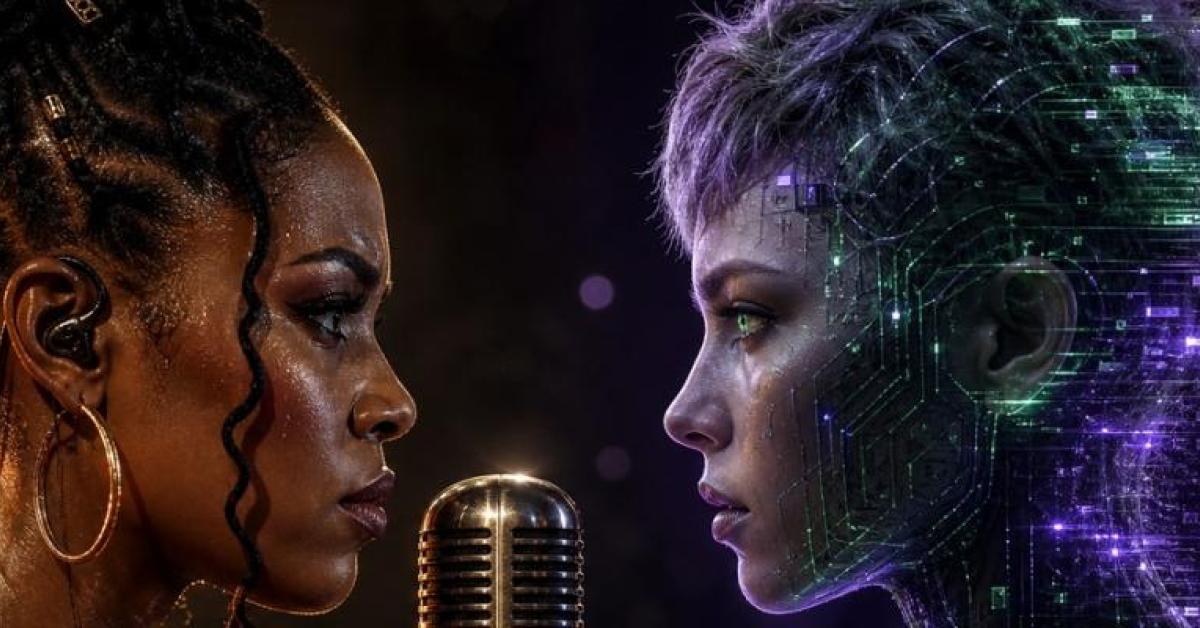
Should AI Artists Be Allowed to Compete With REAL Artists?
Australia just drew a line in the sand when it comes to artificial intelligence and music.
The Australian Recording Industry Association, better known as ARIA, has announced that wholly AI-generated music will no longer be eligible for its official music charts.
Music that uses AI as a tool can still qualify.
But if AI generates the primary creative elements of the recording?
You're out.
And that raises a much bigger question for independent artists:
Should AI-generated music be allowed to compete for the same opportunities as you?
Previously, Dr. Dre Told Artists to Embrace AI
Previously, we asked whether Dr. Dre was right to compare artificial intelligence to drum machines and synthesizers.
Dre doesn't see AI as a threat.
The legendary producer called it a new creative tool and compared today's resistance to AI with musicians who once resisted technologies that eventually became standard parts of music production.
His position is essentially that technology doesn't replace creativity.
Creative people learn how to use the technology.
But Australia's new rule introduces another side of that conversation.
Because there's a difference between an artist using AI and AI essentially being the artist.
So what happens when the tool becomes your competition?
Australia Says AI Can Help — But It Can't Be the Artist
ARIA isn't banning every song that uses artificial intelligence.
Its new rules distinguish between AI-assisted and AI-generated recordings.
A recording can still qualify when humans substantially created the music and AI played a supporting role.
For example, ARIA says an AI-assisted recording can include generative AI elements as long as humans perform the lead vocal and primary instruments.
But if AI generates the lead vocal, a key instrumental performance or essentially the entire song from a prompt, ARIA can classify the recording as AI-generated.
And that recording can't chart.
ARIA says the purpose is to protect the human nature of artistry while still allowing musicians to experiment with new technology.
That sounds reasonable.
Until money and opportunities enter the conversation.
What Happens When AI Starts Competing With YOU?
Imagine you're an independent artist.
You paid for studio time.
You bought or licensed the beat.
You spent hours writing.
You recorded the vocals.
You paid an engineer.
You paid for mixing and mastering.
You created artwork.
You shot content.
You paid for distribution and promotion.
Then another person types a prompt into an AI platform and generates a song.
Both records get uploaded.
Both start generating streams.
Both get submitted to playlists.
Both enter contests.
Both compete for media coverage.
Both potentially compete for chart positions.
Should those two records be treated exactly the same?
That's essentially the question the music industry is beginning to confront.
And It Gets Complicated FAST
The easy answer might be:
Ban AI music.
But where exactly do we draw that line?
An artist writes and records the entire song but uses AI to help master it.
Still an artist?
Most people would probably say yes.
An artist writes and performs the song but uses AI-generated background vocals.
What about that?
An artist writes all the lyrics but uses AI to create the beat.
Still their record?
What if the artist writes the lyrics, but AI generates the production and performs the vocals?
And finally:
Someone types a prompt describing the song they want.
AI writes it.
AI produces it.
AI performs it.
The person uploads the finished record under an artist name.
Is that person an artist?
Or are they publishing AI-generated content?
Now Let's Bring This Home
This isn't just Australia's problem.
Platforms like Makin' It are going to have to answer these questions too.
Independent artists regularly submit music to us for reviews, playlists, features and opportunities.
So what happens when AI-generated records start showing up?
Should a fully AI-generated song be eligible for the same playlist placement as a human artist?
Should it be eligible for Artist Spotlight Friday?
Should we review it in the A&R Room?
Should an AI-generated record be able to win a contest with a cash prize?
Should someone behind a fully AI-generated artist receive media coverage alongside musicians who actually wrote, recorded and performed their music?
And perhaps the hardest question:
How much AI can someone use before we stop considering the finished product human-created music?
Dr. Dre May Still Be Right
None of this necessarily means Dr. Dre is wrong.
AI could very well become another standard tool in music production.
Drum machines didn't eliminate drummers.
Synthesizers didn't eliminate musicians.
Auto-Tune didn't eliminate singers.
Digital recording didn't eliminate recording studios.
Technology has repeatedly changed how music gets made.
But generative AI introduces something those earlier technologies couldn't easily do:
It can potentially create the song itself.
That's where the distinction becomes important.
Using technology to create something and asking technology to create something for you aren't necessarily the same thing.
Should AI Artists Get the Same Opportunities?
Australia has made its decision.
AI can assist the artist.
It can't replace the artist and still compete on the ARIA Charts.
Now the rest of the music industry has to decide where it stands.
And eventually, platforms like ours will have to make those decisions too.
So before we write that policy, we want to hear from the artists actually competing for these opportunities.
Should fully AI-generated music be eligible for the same opportunities as human-created music?
Playlists.
Contests.
Media coverage.
Awards.
Charts.
Music reviews.
YES or NO?
And if your answer depends on how much AI was used, tell us where you draw the line.
Leave your thoughts in the chat box below!!