
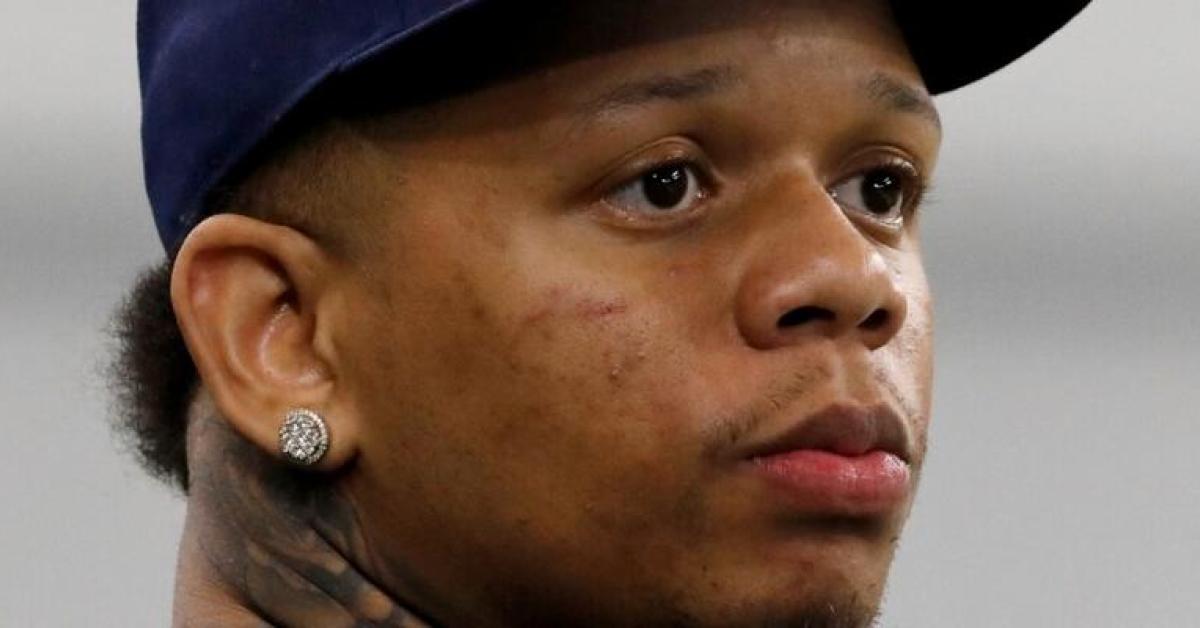
Can Rap Lyrics Be Used Against You? Yella Beezy Case Puts Hip-Hop Back on Trial

The murder case surrounding Dallas rappers Yella Beezy and MO3 is putting an old debate back in the spotlight: When does a rap lyric become evidence?
Jury selection began Monday in the capital murder trial of Kewon White, who prosecutors allege was the gunman in the November 2020 killing of MO3, whose real name was Melvin Noble.
Prosecutors allege Dallas rapper Yella Beezy, whose real name is Markies Conway, hired White to kill MO3 following a long-running rivalry between the two artists.
Yella Beezy has pleaded not guilty to capital murder and denies involvement in MO3’s death. His own trial will take place separately.
But before a jury ever decides his guilt or innocence, another battle has already been taking place in court:
What should jurors be allowed to hear from his music?
The Judge Will Allow Some Rap Lyrics
Yella Beezy's attorneys sought to prevent prosecutors from using his music as evidence, arguing that rap lyrics are creative expression and shouldn't automatically be interpreted as statements of fact.
The judge didn't give either side everything it wanted.
Most of the lyrics prosecutors sought to introduce were excluded, but portions of selected songs were allowed.
Among the music permitted as evidence are Yella Beezy's “Keep It In The Streets,” portions of his collaboration with Trapboy Freddy, “On Ya Head,” and MO3's “2 Nineteen.”
Prosecutors argue the music helps establish the history and seriousness of the rivalry surrounding the case.
The defense sees something very different: performers creating personas and using the conventions of hip-hop to make music.
Is a Rap Song a Confession or a Performance?
That's the larger issue this case raises for hip-hop.
An actor can portray a murderer without anyone assuming a crime has been committed.
A novelist can write a first-person account of a killing without readers automatically believing it is a confession.
Rappers frequently write from a first-person perspective too.
Yet when criminal charges enter the picture, lyrics can suddenly take on an entirely different meaning.
That doesn't mean lyrics can never be relevant to a case. Prosecutors may argue that particular words correspond with other evidence, people or events.
But allowing jurors to hear violent lyrics also creates another concern: Will they judge the evidence, or will they judge the artist's image?
A Key Ruling Just Changed the Prosecution’s Approach
There's another significant development heading into the trial.
During a pretrial hearing, the judge ruled that Dallas Police Detective Eric Barnes could not testify as an expert witness about the rap music involved in the case.
Barnes had investigated cases involving Dallas rappers, and prosecutors had sought to use his testimony to help interpret the music and rivalry.
That ruling could make it more difficult for prosecutors to present their interpretation of the lyrics as expert analysis.
The songs themselves, however, haven't disappeared from the case.
Why This Matters Beyond the Courtroom
This case is bigger than Yella Beezy.
Independent artists routinely release songs, freestyles, videos and social media posts designed to build an image. Sometimes that image is exaggerated. Sometimes it's fictional. Sometimes it's based on real experiences.
Years later, those same pieces of content can still exist online without the context in which they were created.
That makes the Yella Beezy case worth watching closely.
The question isn't simply whether rap lyrics should never be admissible in court.
It's whether hip-hop is being treated like other forms of creative expression — and whether a jury can distinguish between evidence of a crime and an artist performing a character on a record.